

Sunday Support Plan 14: Why "no" turns into a 20 minute meltdown.. and what to do before you say it.
You brace for impact... then try saying, "no." Cue dramatics.

All you said was no.
That’s it. That’s the whole thing that happened. No more cookies before dinner. No, we’re not stopping at the toy aisle. No, the iPad doesn’t come back on right now.
And then the floor drops out.
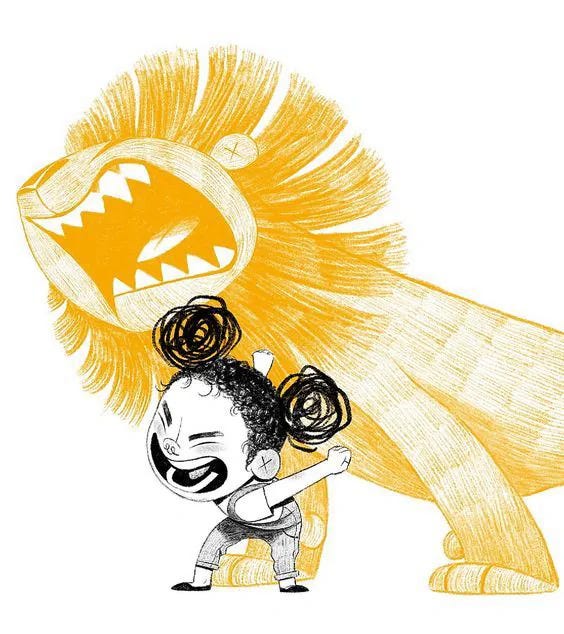
Not “disappointed for a second and moves on.” Full collapse. Screaming, or hitting, or dropping to the ground in the middle of Target, or a door slamming so hard the frame shakes. You’re standing there thinking: it was one word. How is one word doing this much damage?
If you’re bracing yourself before you even open your mouth to say no.. rehearsing it, softening it, sometimes just not saying it because you don’t have the bandwidth for what’s coming.. you are not alone, and you are not doing this wrong.
Here’s what’s actually happening.
A “no” isn’t just information to your kid’s brain. It’s a loss. The thing they wanted.. the cookie, the toy, the extra ten minutes.. was, a half-second ago, available. In their mind, they had it. And then it was taken away. Developmentally, young kids and many neurodivergent kids of any age don’t yet have a fully built-out brake system for that kind of sudden loss. The part of the brain that says “this is annoying but survivable” is still under construction. So the reaction isn’t an overreaction to nothing.. it’s a full-strength reaction to what feels, in that moment, like something being taken from them.
For a lot of autistic kids specifically, this gets amplified. Transitions are already harder. Uncertainty is already harder. A “no” is both a loss and an unplanned transition and a break in the expected sequence of events, all at once. That’s three hard things stacked into one word.
And here’s the part that quietly makes it worse over time, in almost every house: the behavior that shows up after “no” is often working.
Not because you’re a pushover. Because it’s human. Your kid screams, you hold the line for four minutes, you’re exhausted, you’re in public, you’re late.. and you cave. “Fine. One cookie.” You just taught a lesson, and it wasn’t the one you meant to teach. You taught that “no” is negotiable if the reaction is big enough. And the cruelest part of that dynamic is that caving sometimes.. not every time, just sometimes.. is actually the thing most likely to make the behavior stick around. A brain that gets rewarded unpredictably will keep trying longer and harder than a brain that gets rewarded every time. That’s not a parenting failure. That’s how learning works, and almost nobody tells you that.
So if you feel stuck in a loop where “no” reliably turns into a battle, and you’re not sure if you’re supposed to hold firm no matter what or read the room and pick your moments.. that loop is exactly what we’re going to break down.
Saying no is not deprivation. It’s one of the most important regulation reps your kid gets. Every “no” you help them move through is a rehearsal for handling disappointment when you’re not there to manage it for them. That’s the actual goal here.. not a kid who never hears no, and not a kid who silently complies. A kid who can feel annoyed and still be okay.
Below, I’m giving you the full protocol: how to set the moment up before you ever have to say the word, the exact script for when you’re in it, what not to do when it escalates anyway, and how to teach the replacement skill so this gets easier.. not harder.. over time. Plus the specific adjustments if your kid is autistic, rigid, or has a hard time with transitions generally.

If you’re not a paid subscriber, upgrade today to read the rest of this week’s Sunday Support Plan.
