Summer Slide Challenge #3: Reading comprehension isn't one skill. It's a ladder.
Your kid shouldn't feel like their comprehension checks are a pop quiz.

Comprehension checks shouldn’t feel like a pop quiz. The second reading turns into an interrogation, you’ve punished the act of finishing a book.. and that’s the fastest way to kill the desire to pick up the next one.
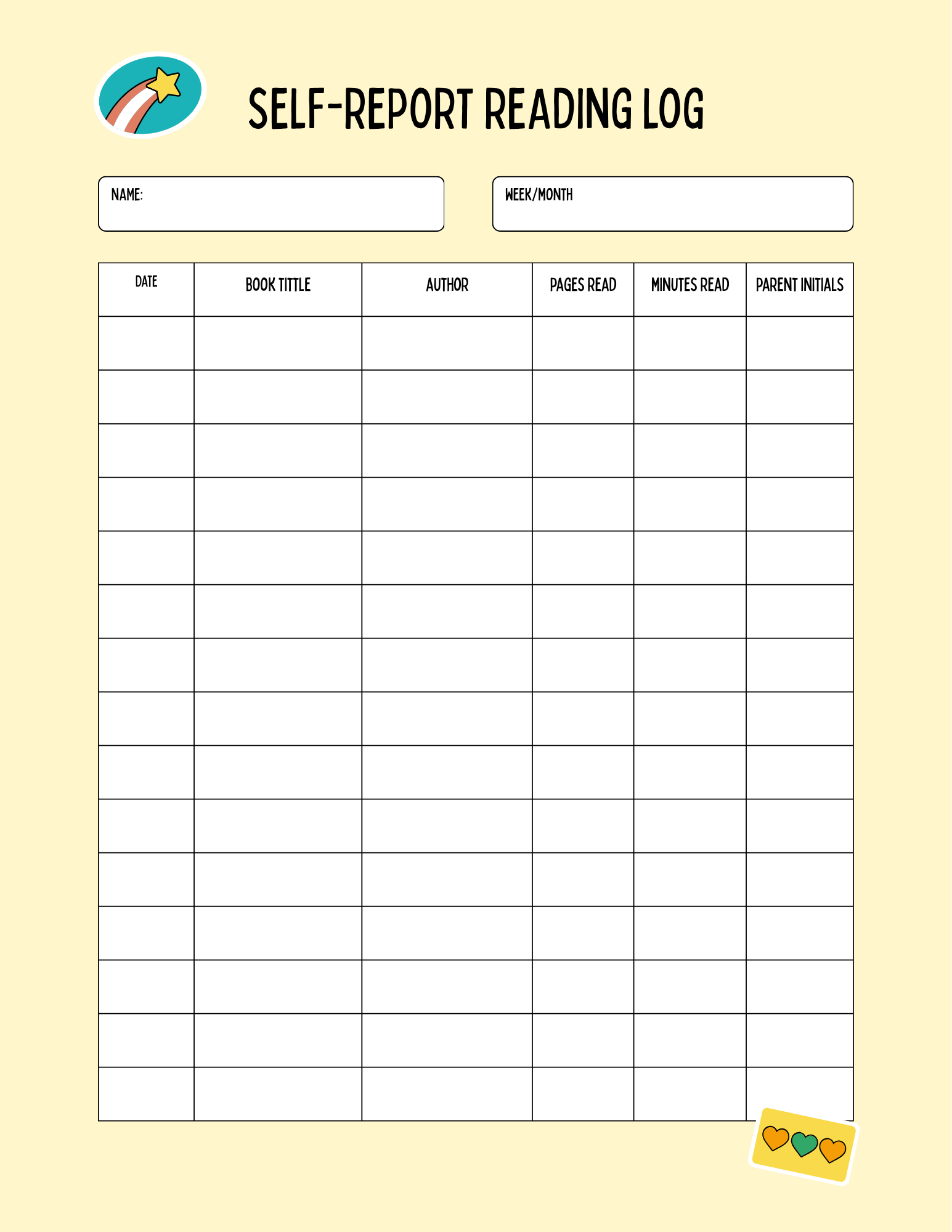
As always, this challenge has your child reading for at least 20 minutes daily. Use this log below to keep your child motivated to continue their reading challenge.
If needed, review the Summer Slide Challenge Part I to learn the easiest way to keep your child motivated to read.
So, how do you actually check if your child understands what they’re reading, without the pop quiz feeling?
Why comprehension looks completely different depending on where your reader is:
Comprehension isn’t a single skill that either exists or doesn’t.
It’s a ladder, and where your child needs to start depends entirely on their current level.. trying to teach strategy-based comprehension to a reader who isn’t there yet just creates frustration and shuts the whole thing down.
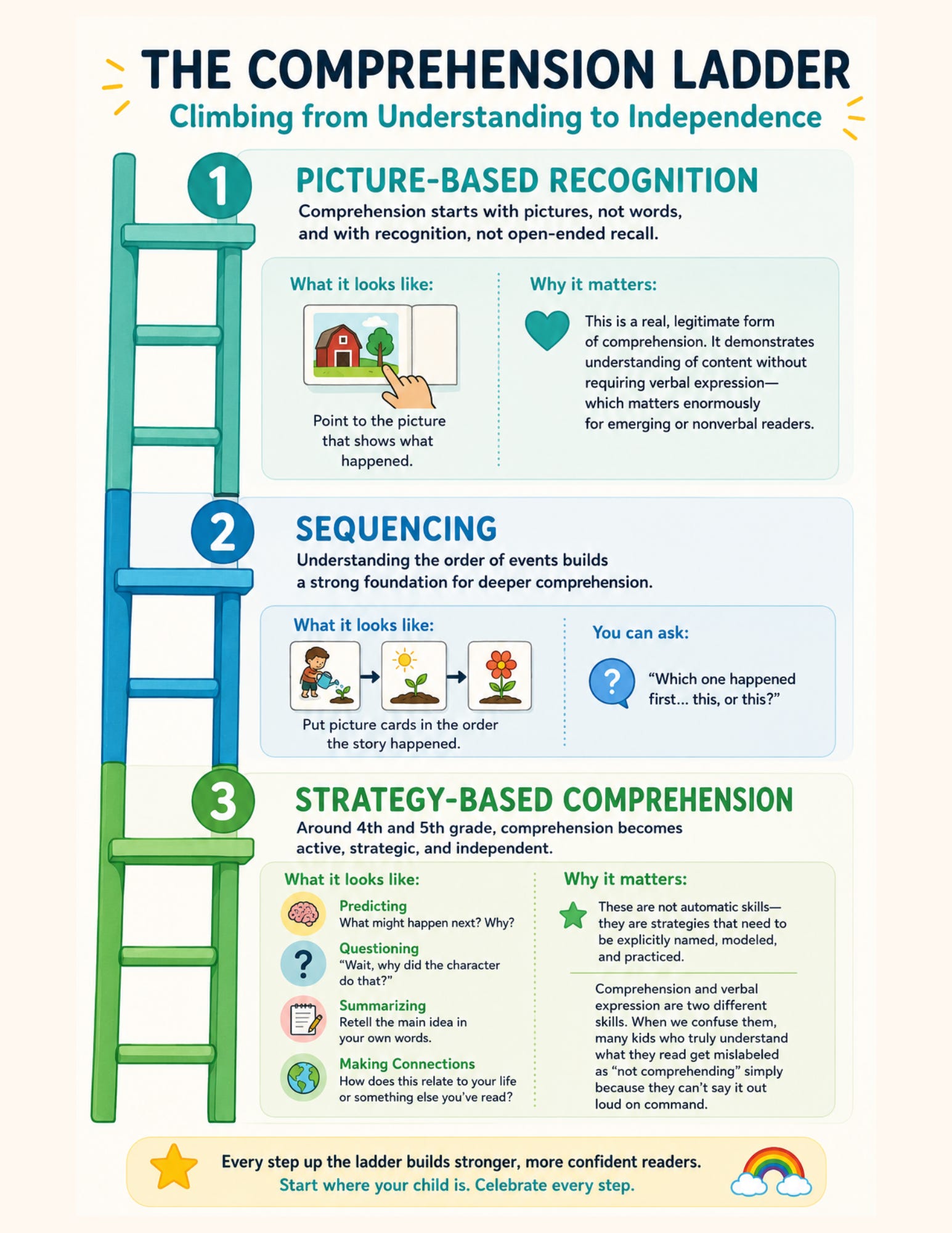
For emerging or nonverbal readers, comprehension starts with pictures, not words, and with recognition, not open-ended recall. Point to the picture that shows what happened. Put picture cards in the order the story happened. “Which one happened first.. this, or this?” This is a real, legitimate form of comprehension.. it demonstrates understanding of sequence and content without requiring verbal expression, which matters enormously for readers who are nonverbal or minimally verbal. Comprehension and verbal expression are two different skills, and conflating them means a lot of kids who genuinely understand what they read get mislabeled as not comprehending, simply because they can’t say it out loud on command.
For readers around 4th and 5th grade, comprehension becomes strategy-based. This is the age where texts stop being simple narratives and start requiring active work from the reader: predicting what happens next and why, questioning while reading (”wait, why did the character do that?”), summarizing paragraph by paragraph in their own words, and making connections between the text and their own life or other things they’ve read. These aren’t skills kids pick up automatically just by reading more.. they’re strategies that need to be explicitly named, modeled, and practiced until a reader starts doing them on their own, silently, without being prompted.
Why “what happened in the book?” backfires:
Open-ended recall questions right after reading are actually one of the harder comprehension tasks there is.. they require a reader to hold the entire text in memory and reconstruct it on demand, with no supports.
For a lot of kids, especially ones already on shaky footing with reading, this feels like a test they’re set up to fail, every single time they finish a book.
That association builds fast: reading ends in being tested.
A reader who feels tested every time they finish a book will, understandably, start avoiding finishing books.
Quick dos for this week of the challenge:
If your reader is early or nonverbal: after your read today, use two pictures from the story and ask “which one happened first?” No verbal answer required.. pointing counts.
If your reader is older: pick one comprehension strategy.. predicting is the easiest starting point.. and use it once today. Before turning the page: “what do you think happens next?”
Skip the recall quiz this week entirely. Just notice what your child naturally says or points to, unprompted, after reading. That’s more honest data than anything you could ask for.
There’s a full progression here.. specific strategy sequences for each reading stage, sentence-starter tools that make strategies stick, and a way to build comprehension without a single quiz question.. all of it lives inside Science of Reading at Home.
Want it done for you?
With love always,
Amanda | Lightly Learning