Summer Slide Challenge #1: Pushing your child to 'just read' for X minutes isn't the whole story.
Let's first learn how to decode every word in the English language.

20 minutes a day.
That’s the challenge goal for each week.

But, just like the title… Pushing your child just to read for 20 minutes isn’t going to make them a better reader.
Or beat the dreaded summer slide.
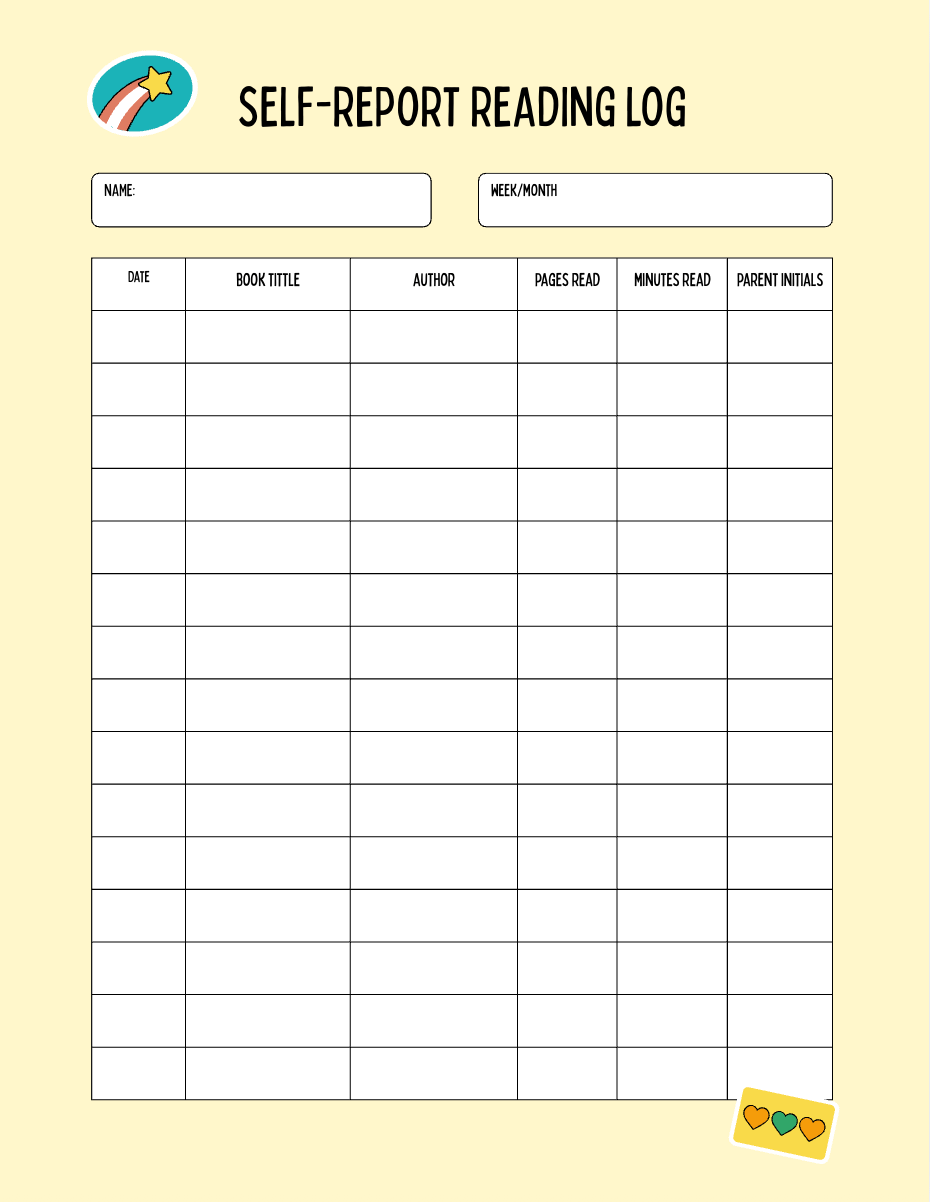
So, use this minute tracker below to help your child stay accountable for each day of the week.
But, this tracker isn’t enough to keep your child motivated to read.
If it is, consider yourself blessed.
If it isn’t, I got your back.
Here’s the easiest way to keep your child motivated to read: work for something reinforcing.
First read for 20 minutes, then _____.
Give them at least two choices to pick something fun to do after they successfully accomplish their 20 minutes.
Every day.
They earn something, just like you earn a paycheck for going to work every day.
Nobody.. kid or adult.. sustains an effortful behavior for free, indefinitely, just because it’s “good for them.”
That’s not a character flaw.
That’s how motivation works for every human nervous system on earth.
But here’s the question that actually matters: if your child is “reading” for 20 minutes a day…
Do they actually know how to read what’s in front of them?
What’s really happening when a kid “reads” without decoding skills:
A lot of kids get through books without ever really decoding the words.
They memorize the shape of familiar words.
They guess from the picture.
They use the first letter and the general sentence topic to fill in the rest.
It works.. for a while.
It works right up until the books stop having pictures on every page, the vocabulary gets specific instead of predictable, and there’s no context clue big enough to guess “photosynthesis” or “reluctantly.”
That’s the wall a lot of kids hit around 3rd and 4th grade, and it’s not because they suddenly got worse at reading.
It’s because the guessing strategy ran out of runway, and true decoding was never actually built underneath it.
Reading researchers describe this with something called the Simple View of Reading: reading comprehension is the product of decoding skill and language comprehension.. not the sum, the product.
That means if decoding is close to zero, it doesn’t matter how strong a kid’s vocabulary or listening comprehension is.
Multiply anything by close to zero, and the result stays close to zero.
Decoding isn’t one input among many.
It’s the gate everything else has to pass through.
So the real question behind “how many minutes did they read today” is actually: how automatically can they decode what’s on the page?
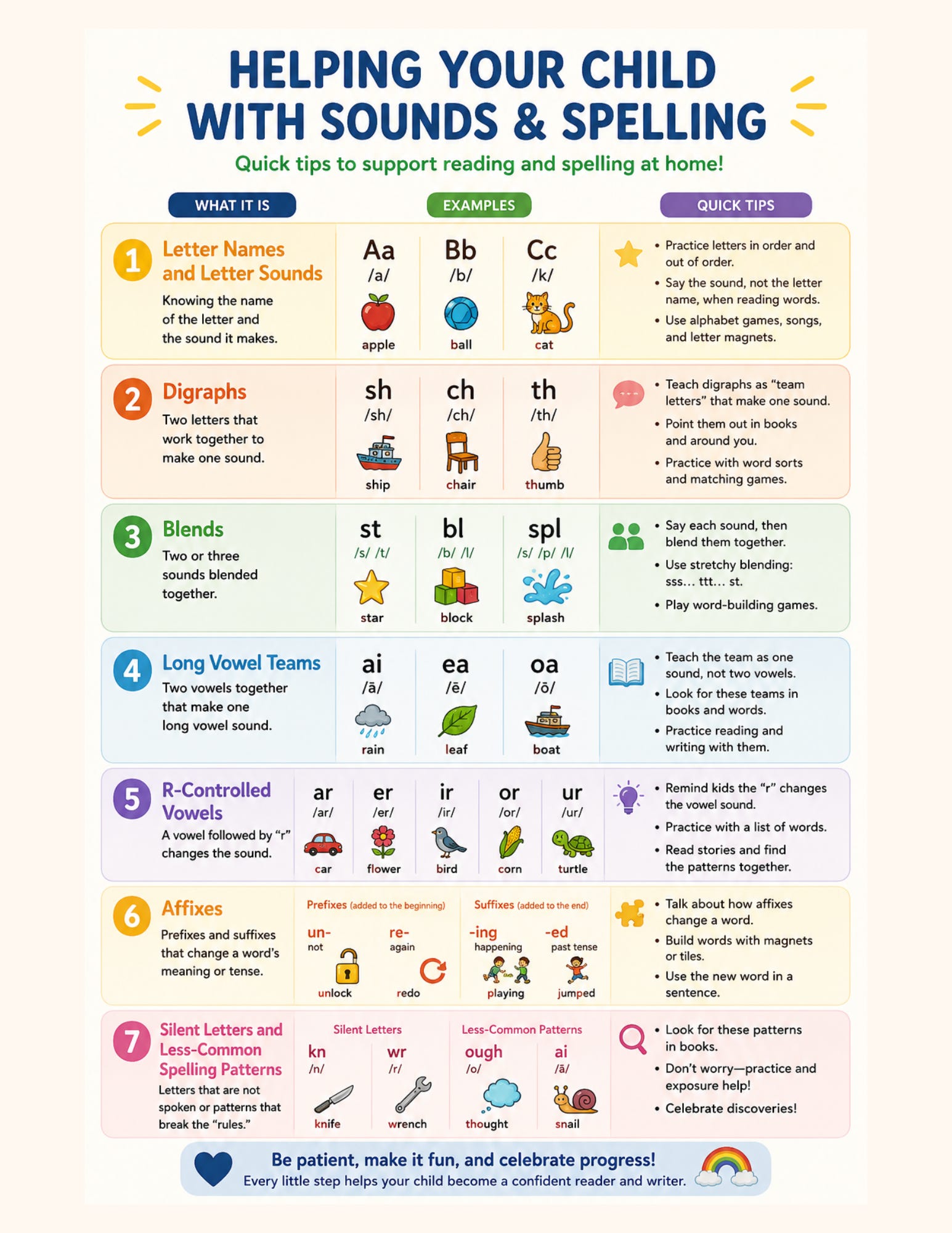
And that comes down to a specific, teachable list of skills.. not vague exposure to books:
Letter names and letter sounds
Digraphs (two letters, one sound.. like sh, ch, th)
Blends (two or three sounds blended together.. like st, bl, spl)
Long vowel teams (ai, ea, oa)
R-controlled vowels (ar, er, ir, or, ur)
Affixes (prefixes and suffixes that change a word’s meaning or tense)
Silent letters and less-common spelling patterns
Here’s how to know where your child actually stands:
How decoding actually gets built.. not guessed at:
Explicit, systematic phonics instruction.. teaching sound-symbol relationships directly, in a planned sequence, instead of hoping kids absorb them from exposure to books.. is what closes this gap.
This is the “science of reading” piece: decades of research on how the brain actually learns to map sounds to print, called orthographic mapping.
Every time a child sounds out a word correctly and connects it to its spelling, that word gets a little more automatic.
Do that enough times, with enough words, and decoding stops being effortful.. it becomes instant recognition.
That’s the whole goal: get decoding out of working memory so there’s room left over to actually understand what’s being read.
Quick dos for this week of the challenge:
Pick 3 skills from the list above and do a 2-minute check with your child today.. can they tell you the sound, not just recite the alphabet song?
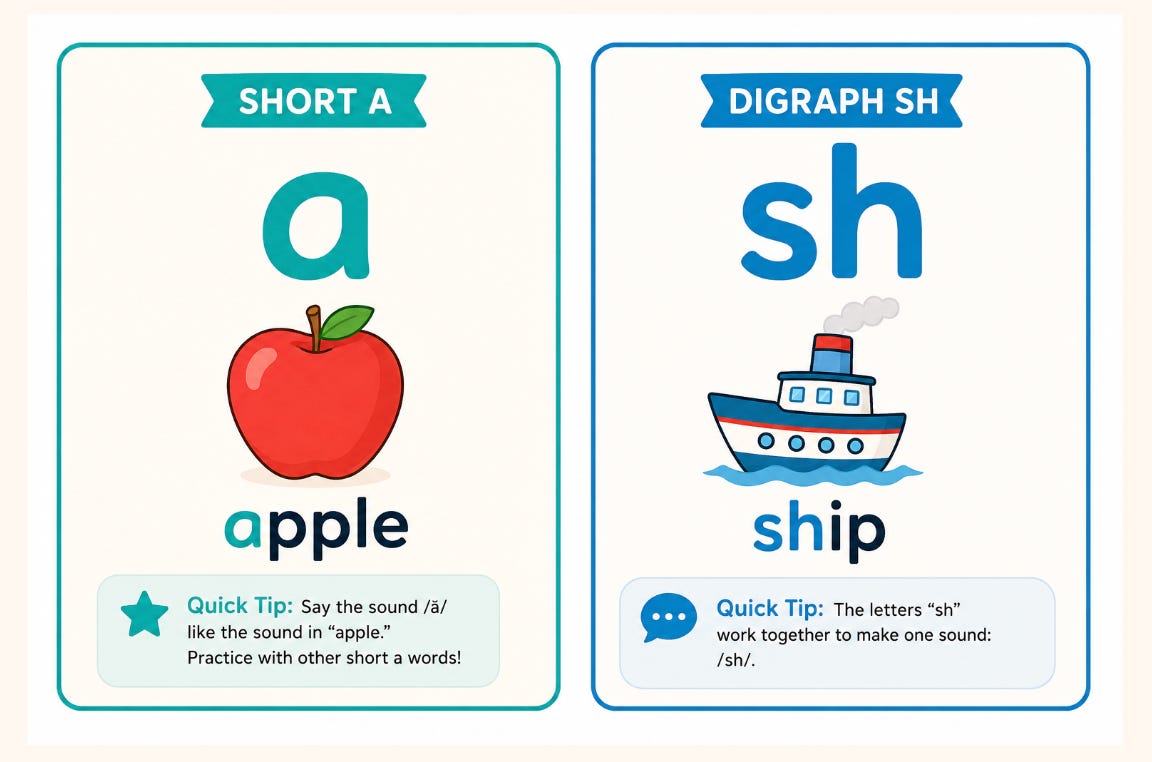
Make simple flashcards pairing a picture with each sound you’re targeting. Apple for short a. Ship for the digraph sh. Visuals give early readers something concrete to anchor an abstract sound to.
During your 20 minutes today, notice.. does your child sound out unfamiliar words, or guess and move on? Don’t correct yet. Just notice. That’s your starting data point for the week.
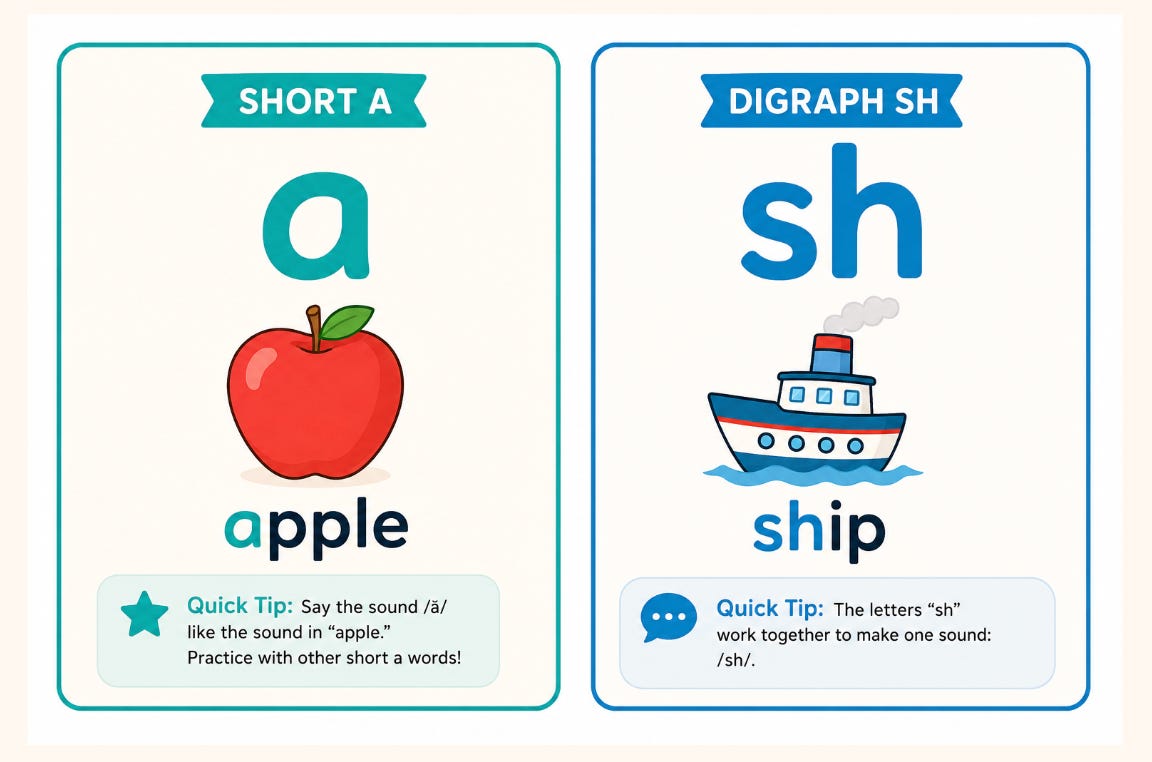
This is a taste of what’s underneath real decoding instruction.. there’s a full sequence to how these skills get taught, in what order, and how to know when to move to the next one.
That’s the exact system inside Science of Reading at Home.
Want the full sequence, done for you?

With love always,
Amanda | Lightly Learning